Enhancing co-benefits of conservation or protected area management through an inclusive wildlife based ecotourism strategy

Author and visual design: Communication Unit
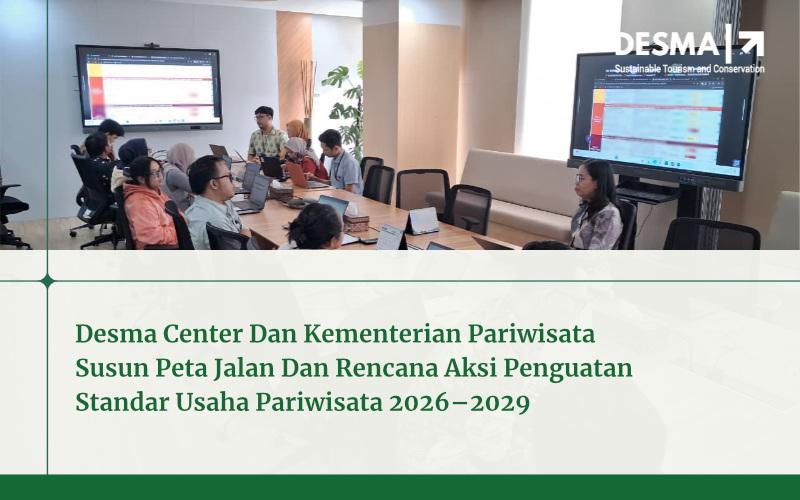
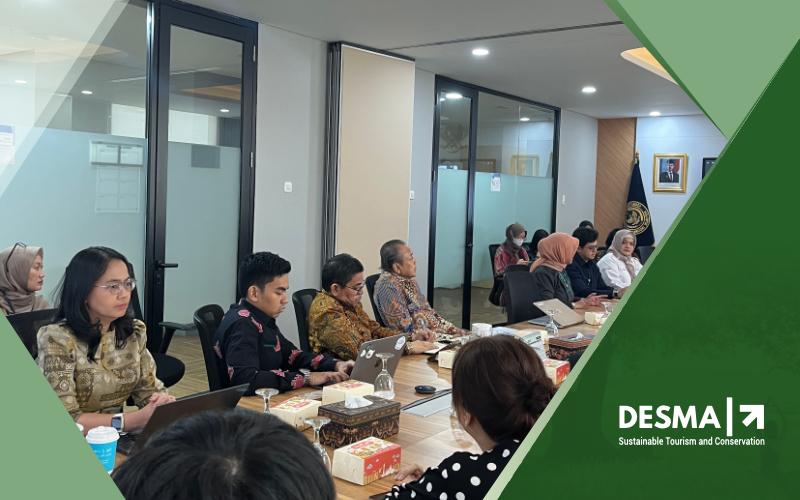
In addition to that, a series of Focus Group Discussions (FGD) and inception workshops were undertaken in Jakarta in 16 January, 2025 which attended by government agencies, academics, NGOs, UNDP, and consultants; Jakarta and Bogor (March 6-7 & March 14-18, 2025): Additional FGDs to refine project design; Jakarta (March 19, 2025): Pre-validation workshop with KSDAE directorates and relevant agencies. These meetings are conducted to prepare Final validation workshop with key stakeholders in Jakarta (April 16-17, 2025).
The Project Preparation Grant (PPG) is a funding mechanism used by the United Nations Development Programme (UNDP) to develop and prepare comprehensive sustainable development projects, funded by the Global Environment Facility (GEF). The PPG focuses on environment, food security, climate change, and inclusive development projects. The GEF is an international funding agency that finances global environmental projects. One of them is the project “Enhancing co-benefits of conservation/protected area management through an inclusive wildlife-based ecotourism strategy (ECOTOURISM)” funded under the Global Biodiversity Framework Fund (GBFF) mechanism.
This project works with the Indonesian government, in this case the Ministry of Forestry, Directorate General of Natural Resources and Ecosystem Conservation (KSDAE), especially the Directorate of Environmental Services Utilization, to improve the effectiveness of protected area management and address development challenges through wildlife-based ecotourism. The project will last for 5 (five) years in 5 (five) locations namely Way Kambas National Park, Tanjung Puting National Park, Wakatobi National Park, Baluran National Park and Alas Purwo National Park.
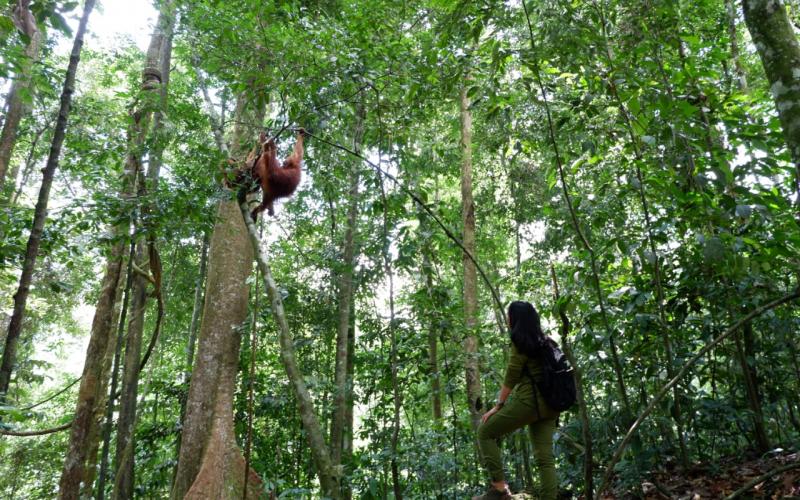
Indonesia's approximately 27 million hectares of conservation forests, with their richness and natural beauty, are a resource for developing Wildlife-Based Ecotourism. This is a form of ecotourism that focuses on tourism experiences based on protecting animals in their natural habitat. Ecotourism resources are found in various national parks, which are home to a variety of key, endemic and rare species.
In developing and preparing for this project, the PPG team, consisting of international and national teams working together for UNDP and the Indonesian government, conducted a series of visitations to project sites including Way Kambas National Park on January 13-15, 2025 and Tanjung Puting National Park on January 20-22, 2025.
In the preparation and preparation of the project, a series of Focus Group Discussions (FGDs) were conducted in the form of an inception workshop held in Jakarta, January 16, 2025, attended by relevant ministries/institutions, academics, NGOs, UNDP and the consultant team. Including a series of FGDs held in Jakarta and Bogor on March 6-7, 2025, and March 14-18, 2025. FGDs with the aim of pre-validation workshops were also held involving various directorates within KSDAE and related UPTs in Jakarta, March 19, 2025. A series of FGDs and internal meetings were also conducted in preparation for the validation workshop which will be held on April 16-17, 2025 in Jakarta, attended by relevant ministries/institutions, academics, NGOs, UNDP and the consultant team.
.jpg)
Ecotourism is one of the applications of sustainable tourism principles; it is one of the relevant solutions to the over-utilization of natural resources, the increasing carbon footprint, and the decline in ecosystem quality in conservation areas due to the high number of tourists who exceed the carrying capacity of the environment.
Ecotourism balances economic interests, environmental conservation, and the well-being of local communities. It is an approach where travelers, businesses, communities and governments work together to ensure more environmentally friendly tourism development and travel practices.
The development of Wildlife-Based Ecotourism not only provides an educational tourism experience for visitors, but also a source of funding for conservation. By ensuring that a portion of the revenue from ecotourism is used for ecosystem preservation, wildlife monitoring, and local community empowerment; this concept becomes a solution for the sustainability of conservation as well as the economy of the surrounding community and the country's revenue.
DESMA Center supports ecotourism development strategies, especially sustainable wildlife-based ecotourism through policy development, training and capacity building of human resources, and data-based research to ensure that ecotourism in Indonesia can develop sustainably, inclusively, and positively impact the environment and local communities. Wiwik Mahdayani from DESMA Center, joined as one of the PPG team for UNDP in assisting the Indonesian government to prepare and develop the project “Enhancing co-benefits of conservation/protected area management through an inclusive wildlife-based ecotourism strategy (ECOTOURISM)”.