Environmental Care and Climate Change Action Awareness Campaign for Tourism Vocational School Students in Tebara Tourism Village, West Sumba, East Nusa Tenggara
Penulis: Agustina Purnami Setiawi, Programme Officer Field Office Sumba
Editor: Firra Kholisha Mustika, Communication
Tebara Village is one of the leading tourist villages in West Sumba Regency with its cultural tourism, namely the Prai Ijing Traditional Village. Megalithic culture (large grave stones and sarcophagi) and the traditional Sumba Tower house are tourist attractions in this village.
Apart from cultural tourism, Tebara Tourism Village also has other tourist attractions, namely natural tourism, such as Weeboro natural lake, Pangadu Hill, Wee Padenan Hill, and Ngadu Bonnu Hill which has views of the Indian Ocean to the south.
Cultural sustainability has brought Tebara Tourism Village into the 75 selected Tourism Villages in the 2023 Indonesian Tourism Village Award (ADWI). With the increasing achievements of Tebara Village as the best Tourism Village, this has also had an impact on increasing the number of tourists who contribute to increasing the amount of waste, especially plastic waste.
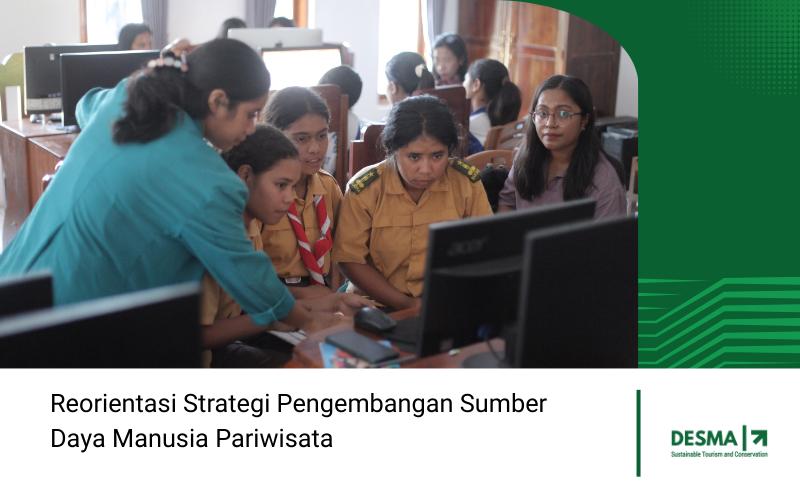
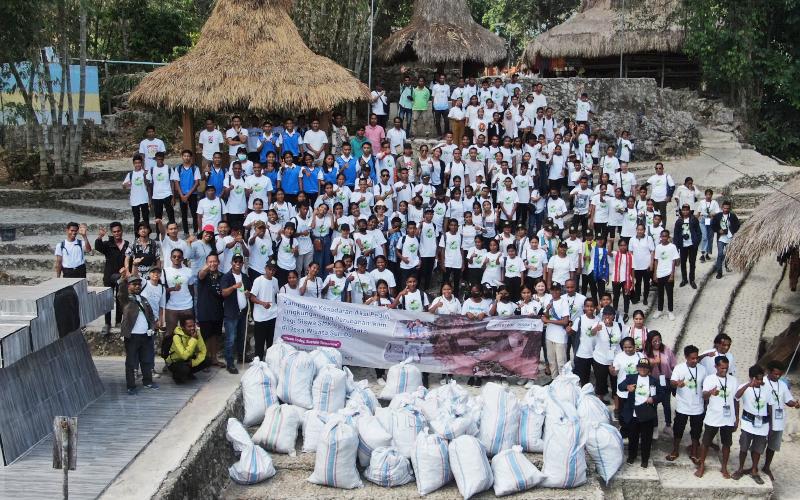
Supporting a Sumba free of plastic waste, the DESMA Center is carrying out an Environmental Care and Climate Change Action Awareness Campaign for Tourism Vocational School Students in Tebara Tourism Village, West Sumba, East Nusa Tenggara on September 16 2023, which coincides with World Clean-up Day.
Followed by a total of 226 people, 97 students and 18 teachers from assisted schools (SMKS Bakti Luhur Tambolaka, SMKS Pancasila, SMKS Efata Omba Rade, SMKN 2 Kota Tambolaka, and SMKN 1 Waikabubak); 44 students and 7 teachers from non-assisted schools (Waikabubak Christian High School, Weekerou Christian High School, Sint Piter Catholic High School and Waikabubak 1 High School); 49 participants from the general public (NGOs, environmentalists, government and private agencies); and 11 committee members and the DESMA Center Sumba team.
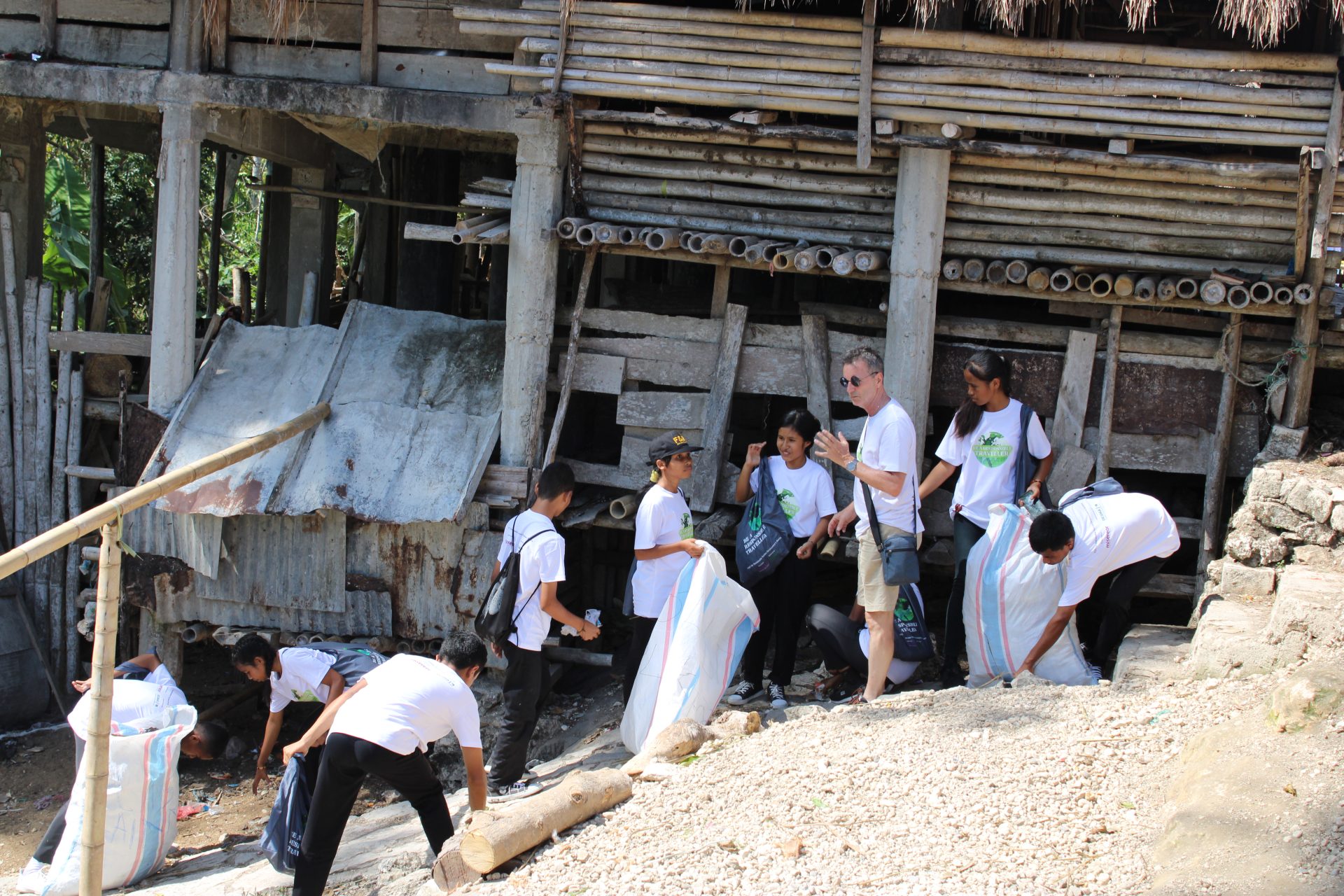
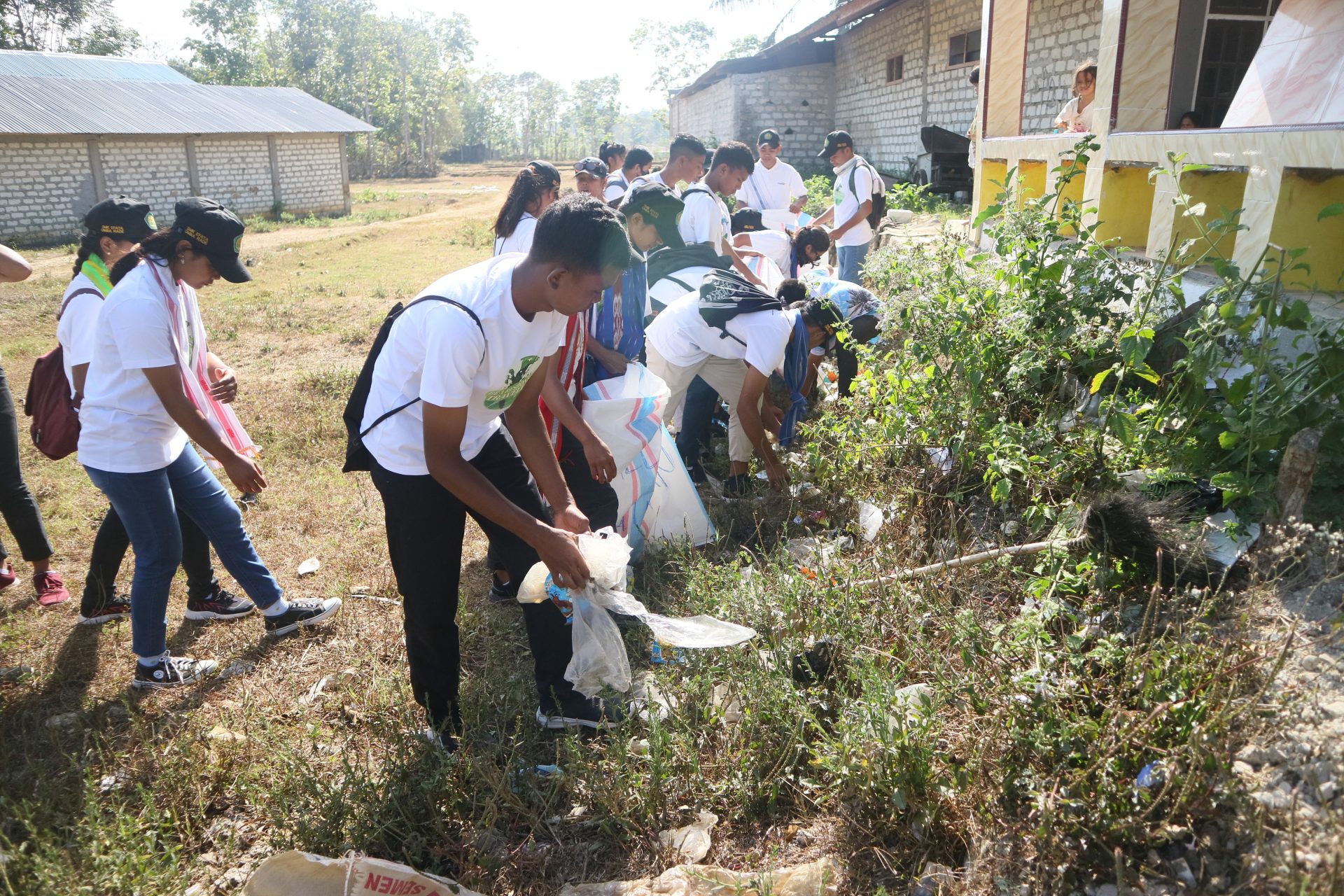
Waste sorting is divided into 3 points, namely the Tebara Village Office towards Praijing Tourism Village, the West Sumba Dukcapil Office towards Praijing Tourism Village, and Prai Rame Village. From this activity, 175.3 kg of waste consisted of 165.9 kg of inorganic waste including plastic packaging, plastic bottles, cans and cardboard; and 9.4 kg of residual waste including cigarette butts, diapers, sanitary napkins, masks, torn clothes and firecrackers were collected by the participants.
After selecting and sorting the waste, the activity continued with plastic waste education by Mr. Muhammad Bumba Umbu Nay; Secretary of the Sumba Environmental Service and Mrs. Sukarmini Bulu; Plastic waste craftsmen. Mr. Umbu said that plastic is a synthetic material that is difficult to decompose naturally and can pollute the environment such as land, water and air. In order to reduce plastic waste, Mrs. Sukarmini processes plastic waste with economic value such as shopping bags.
This campaign activity involves tourism vocational school students in Sumba who are expected to become agents of better environmental and climate change, one of which is by maintaining environmental cleanliness and being wise in the use of plastic. Implementation of this activity in collaboration with World Cleanup Day Indonesia (WCDI) and supported by Sinar Tambolaka Hotel, Sirkey Café, PT. Pegadaian (Persero) Waitabula Branch, and Nirru Loko Restaurant.
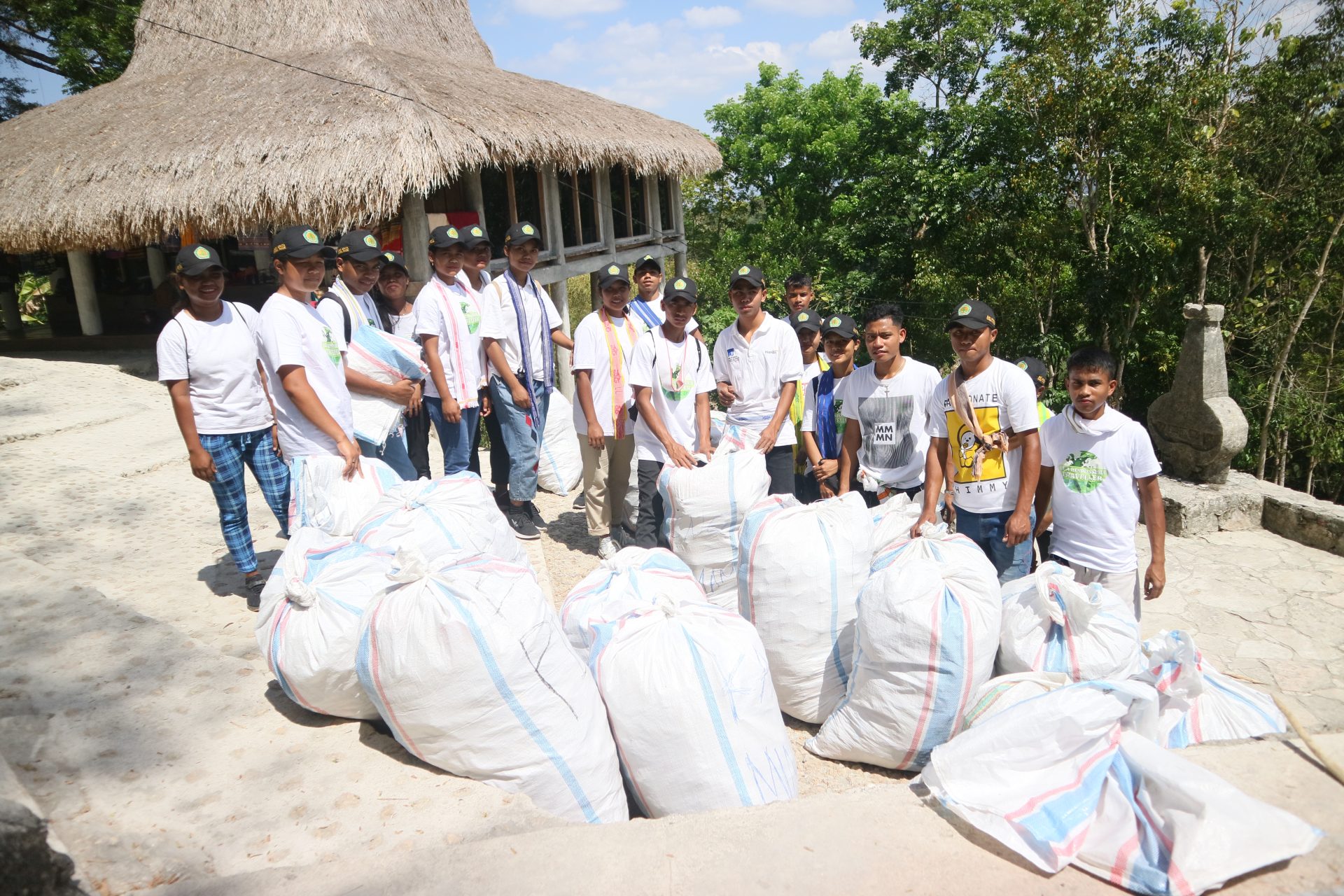
The Environmental Action and Climate Change Awareness Campaign for Tourism Vocational School Students in Tebara Tourism Village, West Sumba, East Nusa Tenggara is part of Program TVET for Sustainable Tourism Development in Sumba which is implemented by the DESMA Center.
_____________
The TVET for Sustainable Tourism Development in Sumba program is supported by MISEREOR/KZE; implemented by the DESMA Center. Strengthening the Capacity of Tourism Human Resources aims to realize "a tourism vocational school education program in Sumba to meet the needs and requirements of the tourism industry, thereby offering better job opportunities for young people and supporting sustainable tourism in Sumba."
This program includes strengthening (1) Management capacity of tourism vocational schools in line with the independent curriculum and the concept of sustainable tourism; (2) Teacher capacity in pedagogical knowledge, about teaching and sustainable tourism (3) Tourism Vocational School-Tourism Industry Partnership; and (4) Students' entrepreneurial capacity in creating a sustainable tourism business.
The direct beneficiaries of this program are (1) Pancasila Vocational School – Tambolaka, Southwest Sumba; (2) SMK Negeri 2 Tambolaka City, Southwest Sumba; (3) Bakti Luhur Vocational School – Tambolaka, Southwest Sumba; (4) Efata Vocational School - Omba Rade, Southwest Sumba; and (5) Waikabubak State Vocational School 1, West Sumba. The direct partners of this program are (1) East Nusa Tenggara Province Education & Culture Office; (2) Southwest Sumba Regency Government; (3) West Sumba Regency Government; (4) Southwest Sumba Regency Tourism Office; and (5) West Sumba Regency Tourism Office.