Industry-based Curriculum Workshop for Tourism Vocational High Schools
Writer: Adrianus Ubas, Programme Officer Field Office Sumba
Editor: Firra Kholisha Mustika, Communication
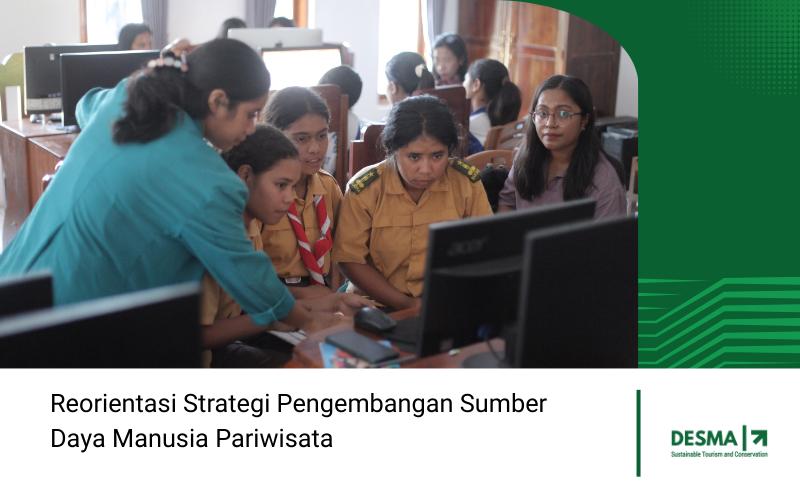
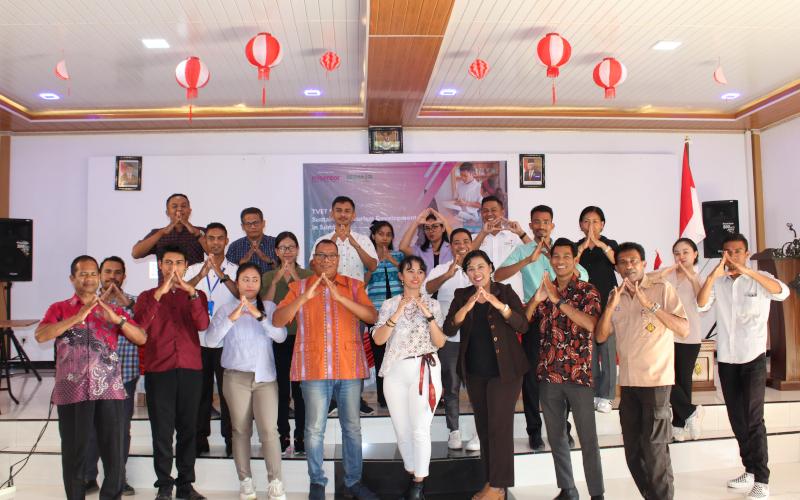
Vocational High Schools (SMK) have one main goal, namely preparing work-ready graduates. Therefore, schools need to align the curriculum to suit industry needs. DESMA Center facilitates industry-based curriculum preparation workshops for Tourism Vocational Schools on Wednesday, August 30 2023. This workshop isfollow up from activitiesPrevious Curriculum Workshop on January 10 2023.
This activity was carried out in parallel in two locations, namely in Southwest Sumba to discuss Tourism Vocational Schools majoring in Tourism Services Business and in West Sumba to discuss Tourism Vocational Schools majoring in Hospitality and Catering. 67 participants participated, consisting of assisted schools (SMKS Pancasila, SMKN 1 Waikabubak, SMKS Bakti Luhur, SMKN 2 Kota Tambolaka, SMKN 1 Waikabubak, SMKS Efata), and affected non-assisted schools (SMKN 2 Lamboya, SMKS Kasimo, SMKN 1 Kodi North, and SMKN 2 Lamboya).
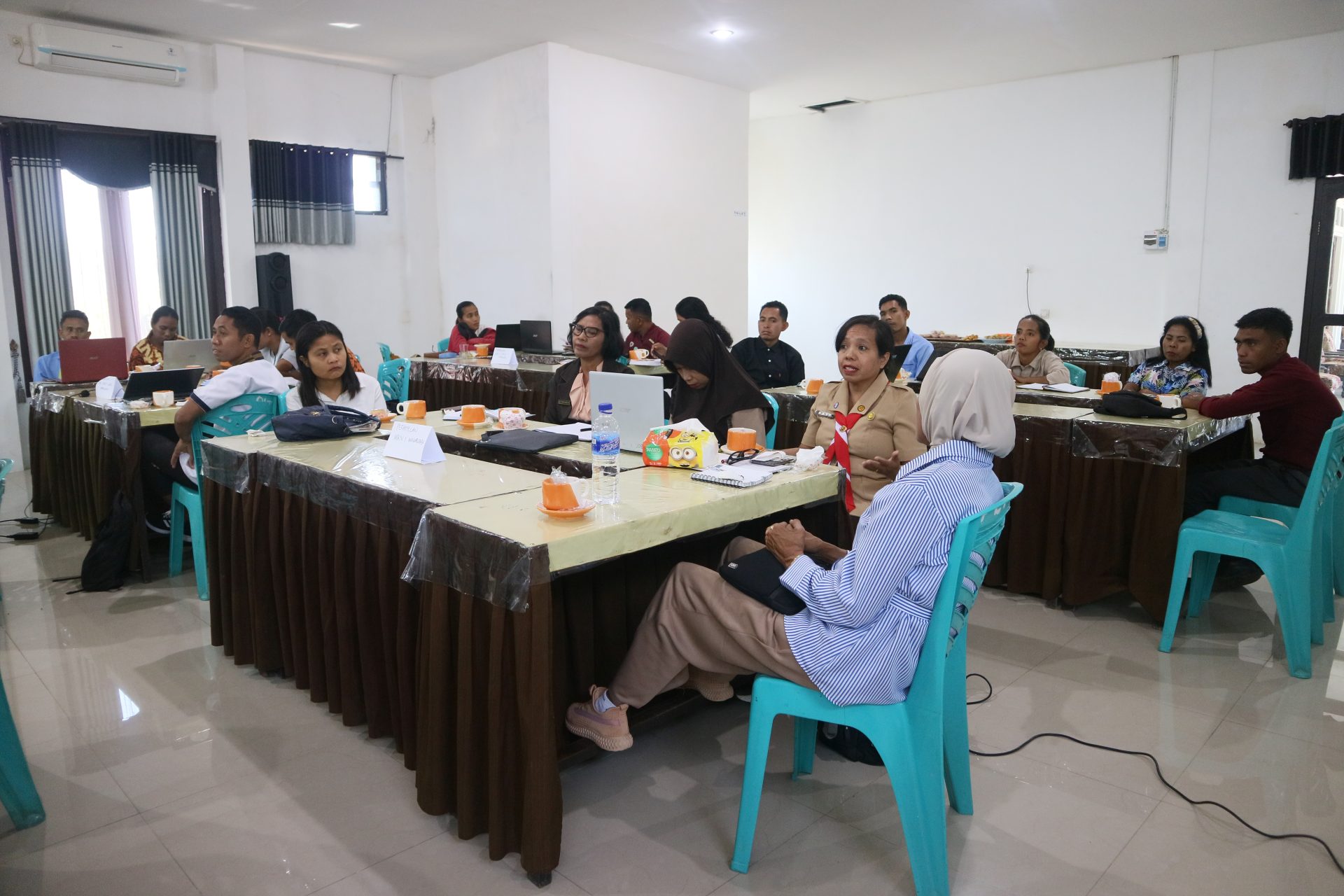
Resource persons from academics, Mrs. Nyoman Aris Suparni; Deputy Head of Curriculum at SMKN 3 Denpasar. Resource person from industry Mr. Dhana Dhiwantara; General Manager of Sima Sumba Hotel, Mr. Mahfud Muhammadon; Manager of Hotel Pelita Waikabubak, Mrs. Vindy Susanti; Manager of Sinar Tambolaka Hotel, Mr. Philip Renggi; Sumba Adventure Tour & Travel, and Mr Yance Lele Dapawole; Indonesian Tourist Guide Association.
Mrs. Adriana Martha Ngongo, S.Pd. M.Pd.K.; The SMA/SMK/SLB Supervisory Coordinator for East Nusa Tenggara Province – West Sumba Regency was also present and gave a speech. In her remarks, Mrs. Adriana emphasized that schools are required to implement the Independent Curriculum in the 2023-2024 academic year. Therefore, this workshop is a meeting place for schools and industry to finalize the curriculum that has been designed by each school.
The workshop is divided into two sessions. The first session issharing from the industrial world and the second session consisted of explanations, questions and answers, discussions and consultations about the Independent Curriculum. By involving industry, schools and teachers; It is hoped that the industry-based curriculum that has been prepared can produce Tourism Vocational School graduates who are better equipped to enter the world of work, thereby contributing positively to developing the local tourism sector.
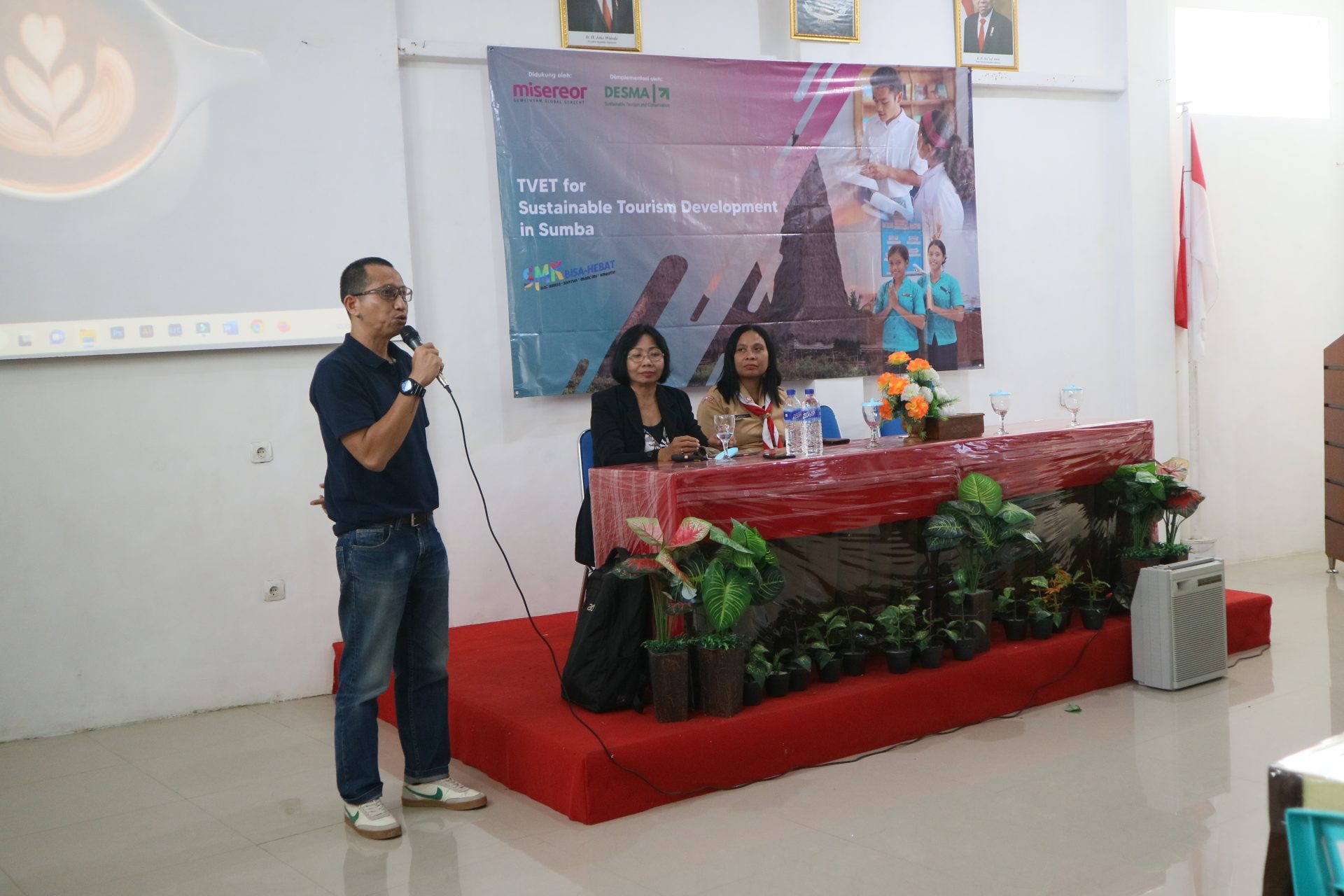
This activity is part ofProgram TVET for Sustainable Tourism Development in Sumba which is implemented by the DESMA Center.
_____________
The TVET for Sustainable Tourism Development in Sumba program is supported by MISEREOR/KZE; implemented by the DESMA Center. Strengthening the Capacity of Tourism Human Resources aims to realize "a tourism vocational school education program in Sumba to meet the needs and requirements of the tourism industry, thereby offering better job opportunities for young people and supporting sustainable tourism in Sumba."
This program includes strengthening (1) Management capacity of tourism vocational schools in line with the independent curriculum and the concept of sustainable tourism; (2) Teacher capacity in pedagogical knowledge, about teaching and sustainable tourism (3) Tourism Vocational School-Tourism Industry Partnership; and (4) Students' entrepreneurial capacity in creating a sustainable tourism business.
The direct beneficiaries of this program are (1) Pancasila Vocational School – Tambolaka, Southwest Sumba; (2) SMK Negeri 2 Tambolaka City, Southwest Sumba; (3) Bakti Luhur Vocational School – Tambolaka, Southwest Sumba; (4) Efata Vocational School - Omba Rade, Southwest Sumba; and (5) Waikabubak State Vocational School 1, West Sumba. The direct partners of this program are (1) East Nusa Tenggara Province Education & Culture Office; (2) Southwest Sumba Regency Government; (3) West Sumba Regency Government; (4) Southwest Sumba Regency Tourism Office; and (5) West Sumba Regency Tourism Office.