The Urgency of Strengthening Green Skills in the Sustainable Tourism Ecosystem
Author: Dani Fauzi
Reviewer and Editor: Wiwik Mahdayani
CNN Travel has ranked Sumba Island, located in East Nusa Tenggara (NTT) Province, Indonesia, as the number one best destination to visit in 2024. Time-Out Asia has also named Sumba Island the best destination to visit in Asia for 2025.
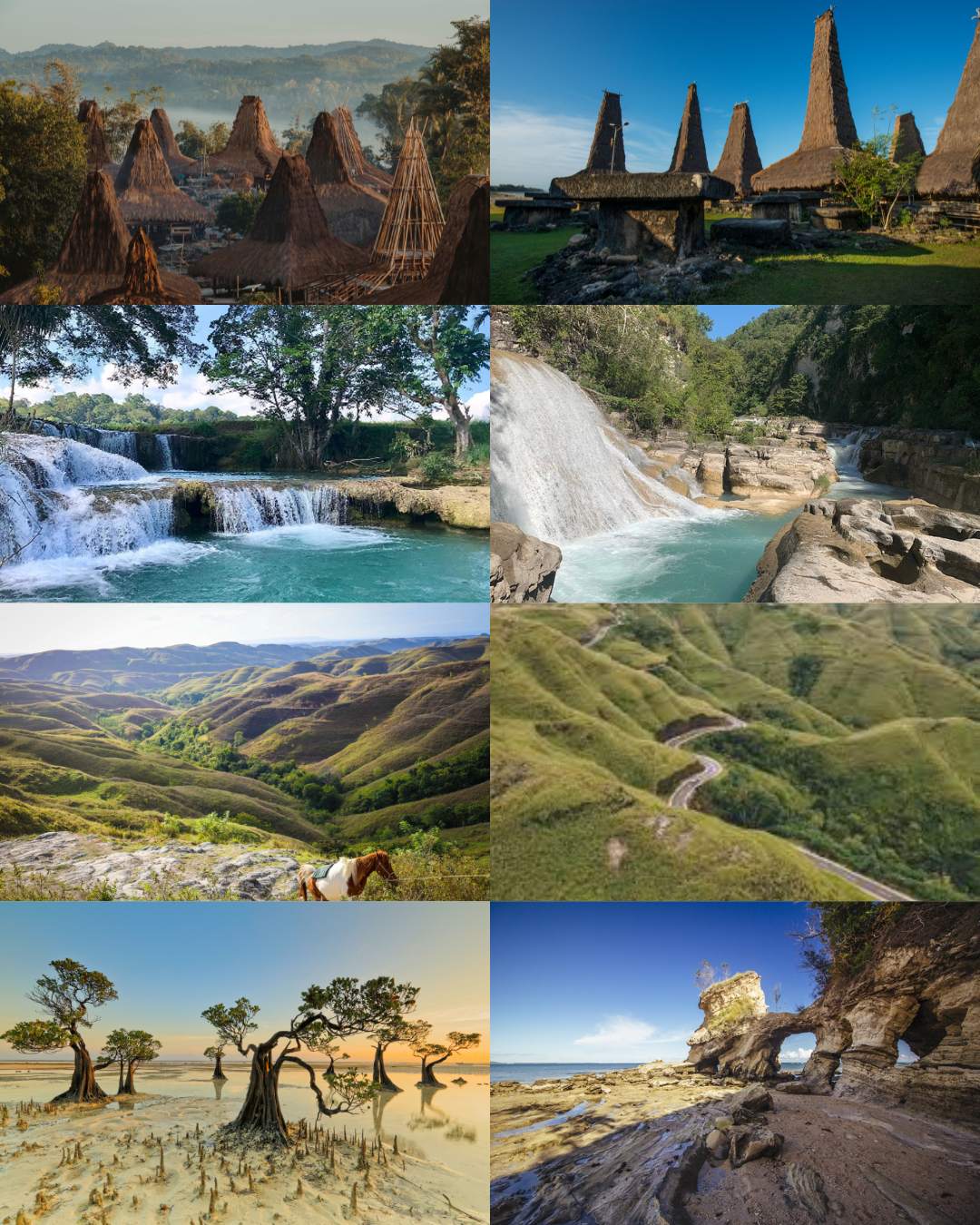
Although it is not yet as popular as its neighboring islands, Sumba possesses strong existing resources. With exotic villages such as Prai Ijing Traditional Village and Ratenggaro Traditional Village, and natural attractions like Waikelo Sawah Waterfall, Tanggedu Waterfall, Waerinding Hill, Hiliwuku Hill, Walakiri Beach, Watuparunu Beach, and many more.
Source: Elaborasi berbagai Sumber Media (2025)
Moreover, Sumba Island is also renowned for its grassland landscapes, limestone hills, and a variety of endemic wildlife species. The island is home to pristine forests, particularly in Matawala National Park, which spans approximately 92,000 hectares. The park boasts rich biodiversity, including 375 species of plants, 28 species of mammals, 30 species of reptiles, 6 species of amphibians, 41 species of dragonflies, 94 species of butterflies, and 159 species of birds. Additionally, the island features 129 caves and the majestic Wanggameti peak.
With world-class surf breaks, Sumba offers a unique experience far from the crowds of Bali. The island’s wide variety of accommodations reflects its diverse market segmentation. In addition to internationally acclaimed luxury resorts such as NIHI Sumba, The Sanubari, and Cap Karoso—catering to international travelers—Sumba also provides options that support MICE activities, community-based homestays in tourism villages, adventure resorts, campgrounds, and eco-lodges that prioritize sustainability. This range of accommodation options demonstrates Sumba’s growing capacity to cater to a broad and diverse tourism market.
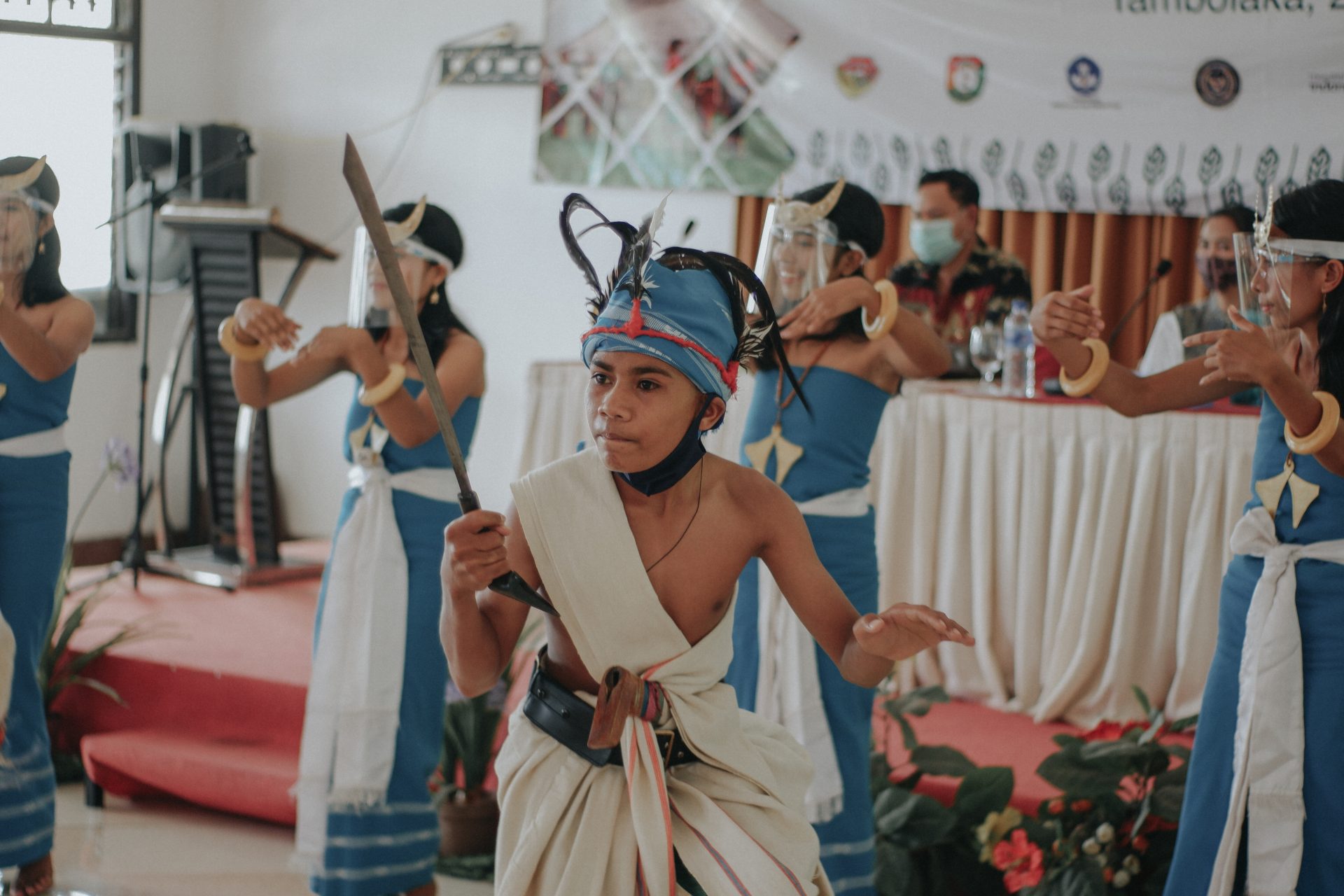
Sumber Foto: Documentation by DESMA Center
The island also embraces the Marapu belief system, a traditional spiritual practice of the Sumbanese people that emphasizes harmony between humans, nature, and their ancestors. Sacred rituals rooted in this belief have been passed down through generations and are still actively preserved today. Sumba is also well known for its distinctive handwoven textiles and the Pasola Festival—an indigenous war ritual where horseback riders engage in spear-throwing battles. With its rich cultural heritage and unspoiled landscapes, the island is gaining attention as an authentic and off-the-beaten-path travel destination.
Sumba faces a range of complex development challenges. For instance, Southwest Sumba Regency continues to experience limited basic infrastructure, unequal access to education and healthcare, high poverty rates, and heavy dependence on low-productivity agriculture (BPS Southwest Sumba, 2025). In this context, the growth of the tourism sector becomes crucial—not only from an economic perspective but also as a strategic opportunity to drive social transformation and enhance community capacity.
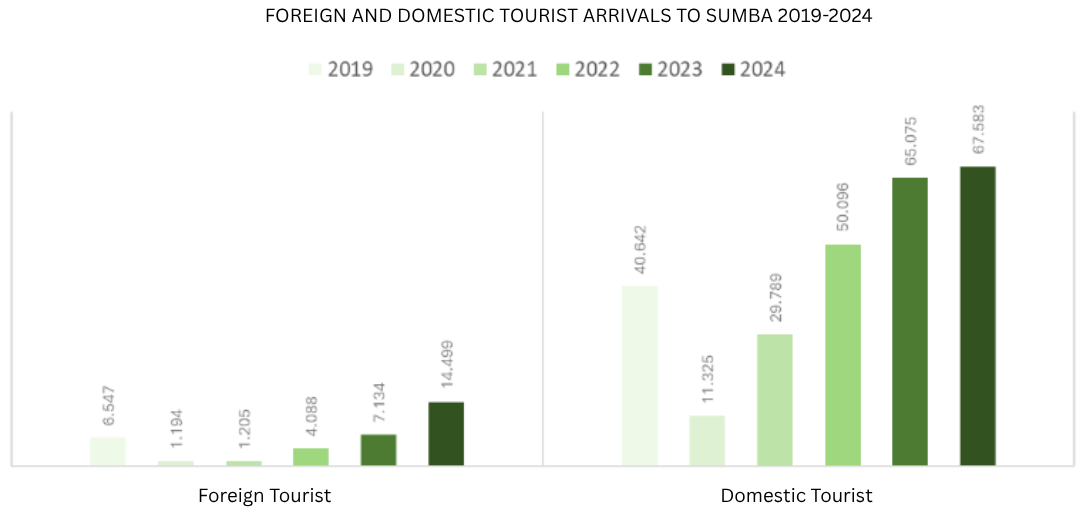
Source: Badan Pusat Statistik Nusa Tenggara Timur (2025); PosKupang Travel (2020)
Tourist visits to Sumba surged in 2024 compared to 2019, serving as clear evidence of the region’s post-pandemic revival. Between 2019 and 2024, international tourist arrivals increased by 121.4%, while domestic tourism rose by 66.3%. These figures are more than just numbers—they reflect how Sumba is gaining recognition as a distinctive and sought-after travel destination with a unique identity.
The increase in tourist arrivals to Sumba Island is not merely an indicator of post-pandemic recovery, but also a signal of the urgent need to manage this growth carefully and sustainably. As Sumba’s main appeal lies in its pristine natural ecosystems and rich local wisdom—both of which have not yet been heavily commodified—unchecked tourism growth could pose serious threats to environmental capacity and cultural integrity. Inclusive sustainable tourism development is therefore essential to improving the social and economic well-being of local communities, while safeguarding the island’s cultural heritage and natural environment (Wisnawa, 2024).
The tourism boom in Sumba calls for an accelerated green transition as the foundation for sustainable, conservation-based development. This transition serves as an entry point into the green economy, where key sectors such as tourism and agriculture are managed based on sustainability principles. To realize this vision, green skills are essential—enabling the local workforce to actively participate in environmental protection and resource efficiency. Green skills are particularly critical in tourism-related environmental management, covering areas such as planning, implementation, monitoring, and continuous improvement (Mari Renfors, 2024). The availability of green skills paves the way for the emergence of green jobs, from sustainable tour guides to tourism development planners and sustainable hotel managers, highlighting the need for specialized expertise to support the green transition within the service industry. In this context, strengthening human resource capacity in Sumba is key to ensuring that economic growth aligns with the conservation of nature and culture—elements that form the island’s core strengths.
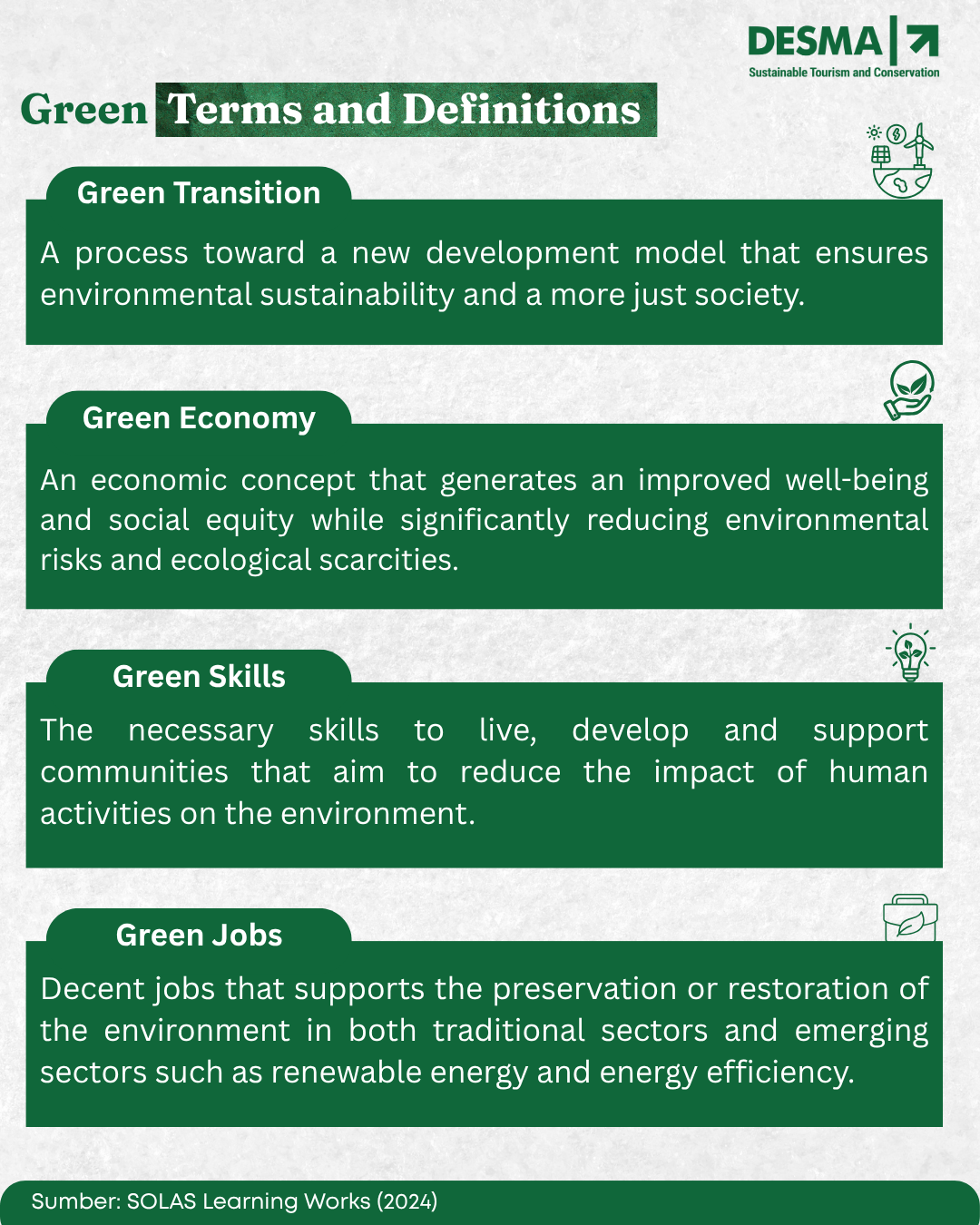
Economic transformation has been established as one of Indonesia’s key agendas in the National Long-Term Development Plan (RPJPN) 2025–2045, with the implementation of a green economy identified as a central pillar of the country’s development direction. In the context of Sumba Island, implementing the RPJPN agenda is not merely about aligning with national policy—it is a pressing necessity to ensure that economic growth does not come at the cost of environmental degradation or the loss of cultural heritage. Therefore, investing in the development of local human resources—through education, vocational training, and mentoring programs rooted in green skills—is urgently needed. This will enable the people of Sumba to become both active participants and direct beneficiaries of the ongoing green transformation.
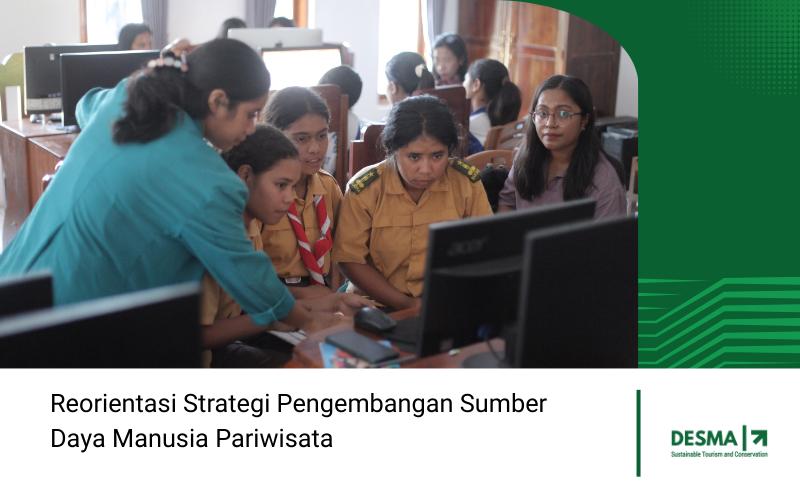
As part of a human resource development strategy focused on sustainability, vocational high schools (SMKs) hold a strategic role in preparing qualified workers ready to enter the green jobs ecosystem—including in the tourism sector. This role is carried out through adaptive curricula that align with future demands, as well as hands-on industry-based tourism training. Specifically, strengthening sustainability-related skills in tourism at the vocational school level may include:
- Energy efficiency in tourism operations
- Independent and environmentally friendly waste management at tourist attractions or within tourism industry operations
- Environmental and biodiversity conservation as key resources in the tourism sector
- Comprehensive understanding of sustainability principles
- Culturally and ecologically based tourism services
- Technical skills in hospitality and travel services
This initiative becomes even more effective when strengthened through partnerships between vocational schools (SMKs), environmentally responsible industries, and vocational training institutions. Through this collaborative approach, SMKs not only produce graduates who are job-ready and entrepreneurial, but also serve as key actors in shaping a new generation of green economy practitioners who are relevant and contextually grounded in Sumba.
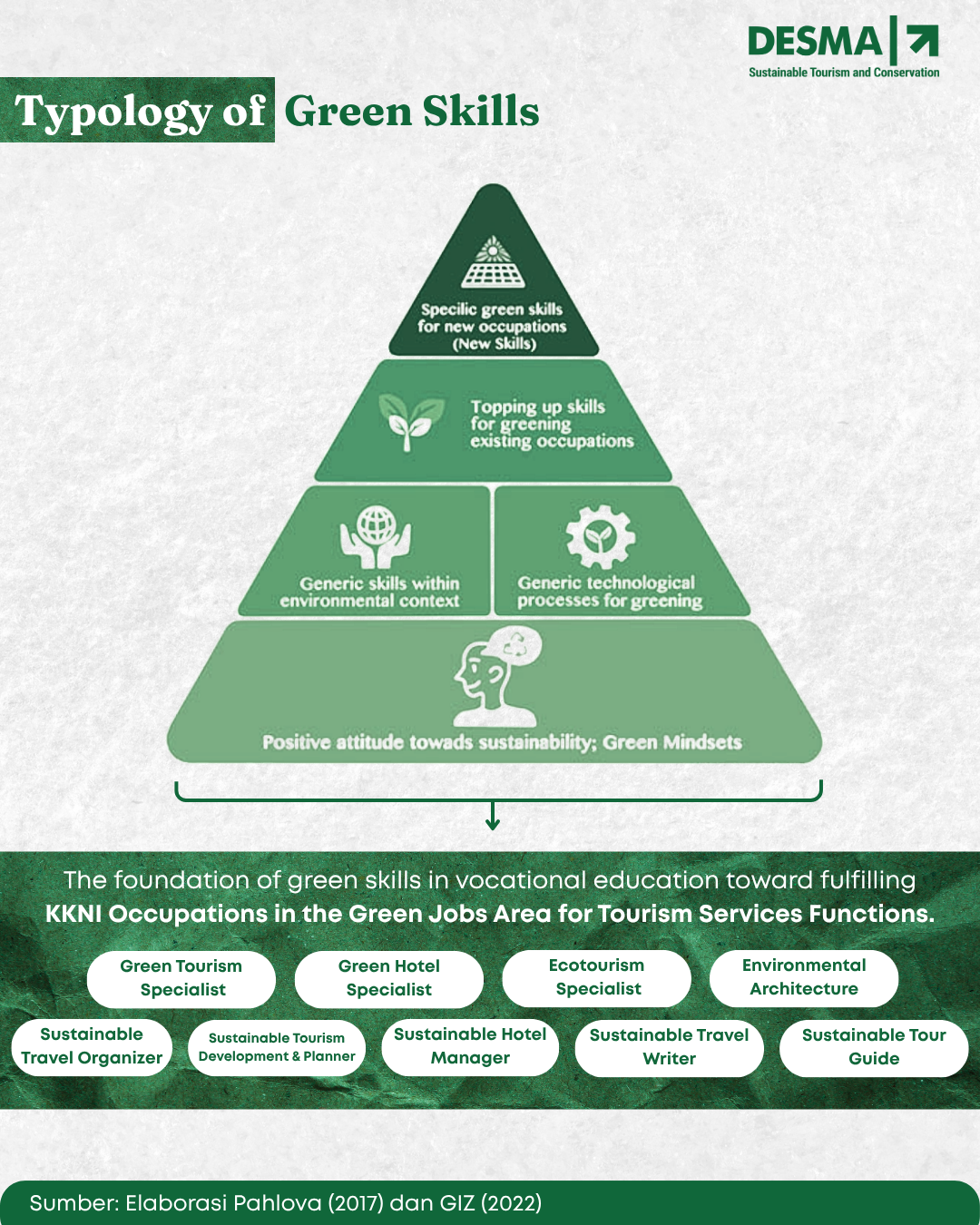
The typology of green skills, as illustrated in this infographic, reflects a tiered approach to sustainable competency development, rooted in the formation of a green mindset and extending to the mastery of specific skills for emerging occupations (Pahlova, 2017). This approach aligns with the conceptual framework of human resource development based on the green economy, which emphasizes not only technological proficiency and environmental context but also a transformation in values and thinking orientation within the world of work. In the context of vocational education, this tiered structure serves as a strategic guide for designing curricula and training programs that are responsive to the dynamics of the green labor market, while also reinforcing the integration between individual capacity building and the systemic transition needs toward sustainability.
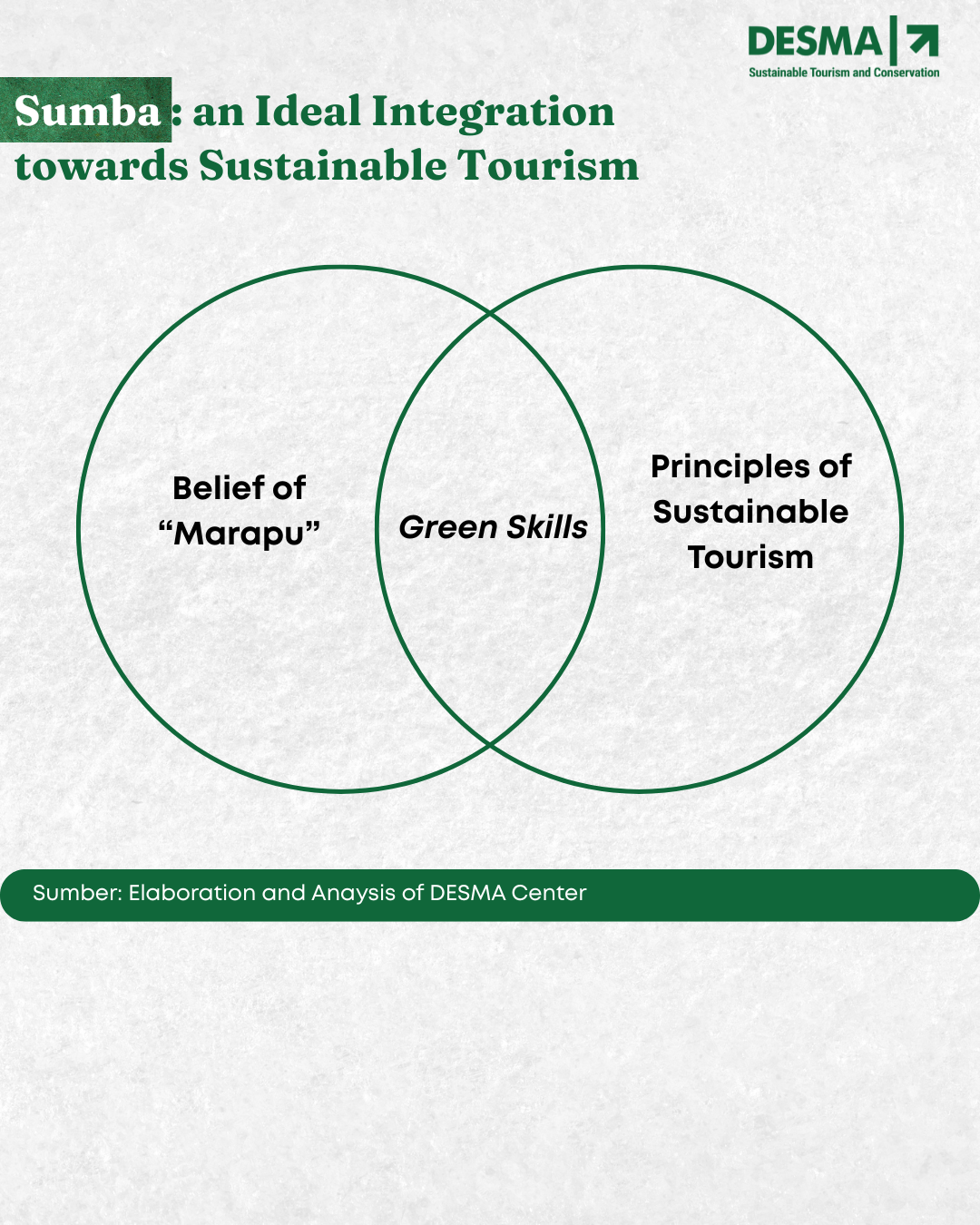
The Venn diagram above illustrates the strong interconnection between the values of Marapu beliefs, green skills, and the principles of sustainable tourism in Sumba. The values embedded in Marapu—emphasizing the interconnectedness between humans, nature, and ancestors—logically intersect with the core principles of sustainability, while green skills serve as a practical bridge to realize these values within the tourism sector. The integration of these three elements establishes a solid foundation for tourism development in Sumba that is not only ecologically sustainable but also culturally authentic.
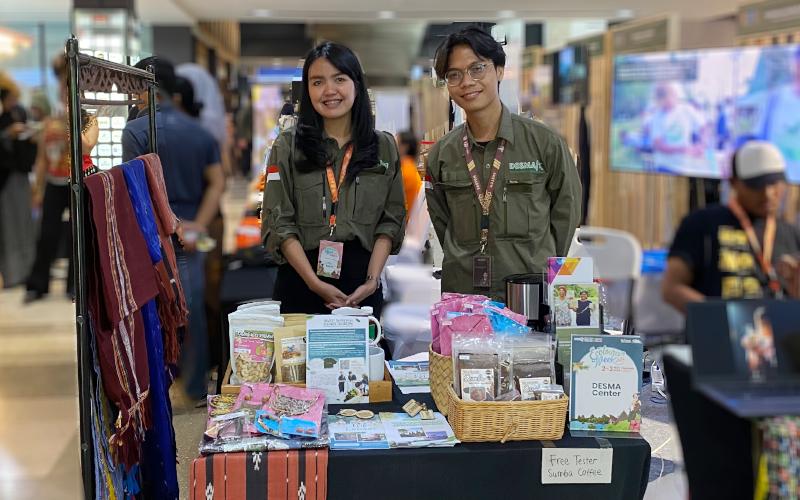
Sumba Island holds both potential and strategic opportunities to become a national model of development based on local wisdom and ecological sustainability. However, achieving this vision requires serious investment in vocational education grounded in green skills. DESMA Center, through the TVET for Sustainable Development in Sumba program funded by MISEREOR/KZE, aims to address the needs of the sustainable tourism industry by strengthening vocational school (SMK) capacities and expanding access to decent work for the younger generation. Various initiatives have been carried out with school management, teachers, and vocational students, such as the Green School Transition Workshop, Environmental Awareness and Climate Change Campaign, Edutainment: Using Digital Media to Enhance Green Competencies, the “Use Water Wisely” Environmental Awareness Campaign, and the Digital Article Writing Workshop for Sustainable Tourism. These efforts are part of a broader movement to support the transition and acceleration of green skills in the land of Marapu.